
The problem often starts at booking time
Late cancellations rarely happen only because clients are careless. They also happen when the cancellation rule was not visible enough, or when practical details stayed fuzzy until the last minute.
If someone books in two clicks but only discovers the real constraints later, the frustration shows up much closer to the appointment.
Show the rule early, then repeat it calmly
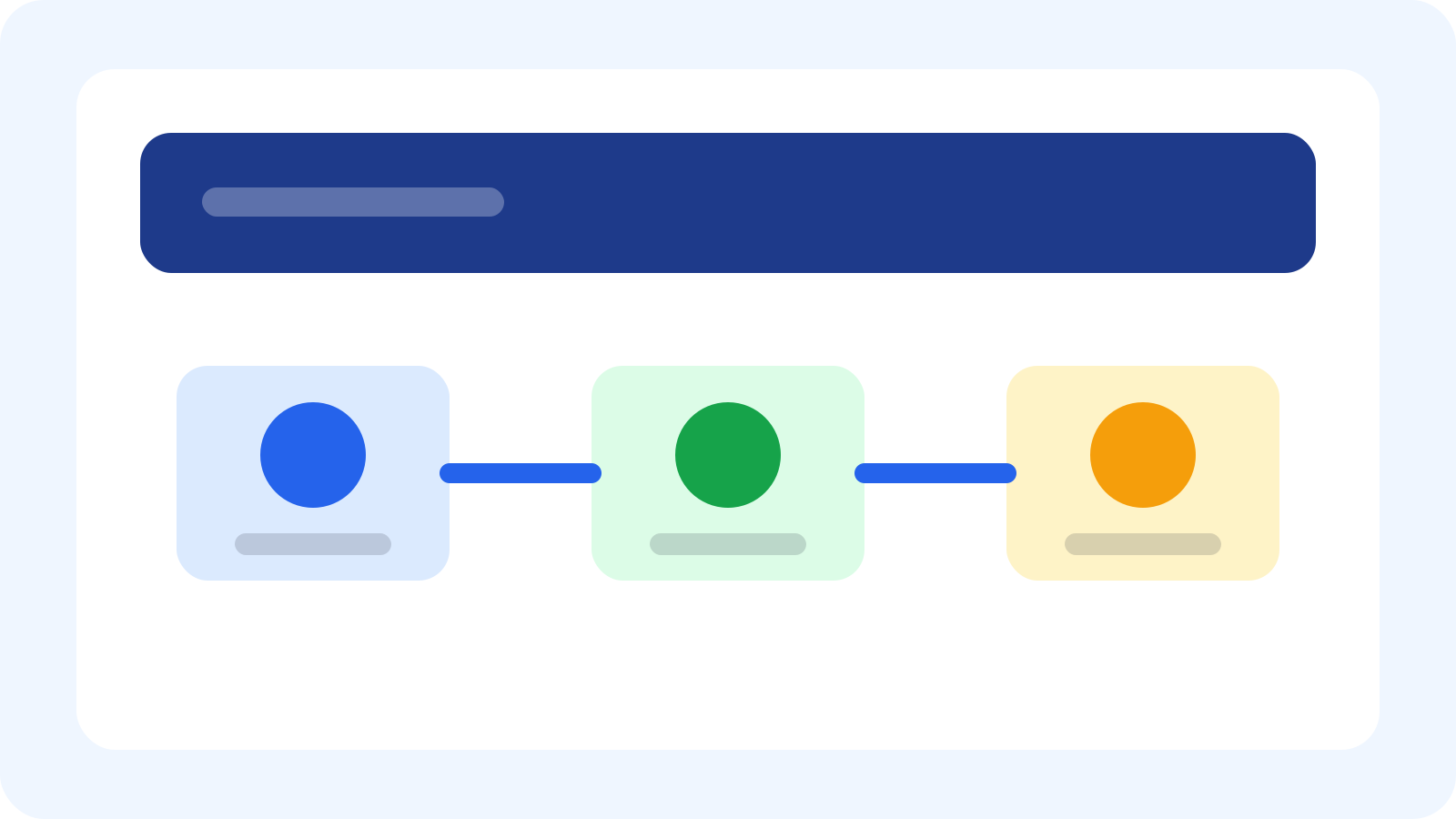
The cancellation window should be visible before confirmation, repeated in the confirmation email, and restated in the reminder. The wording should stay factual and steady each time.
That consistency matters. When a client sees the same rule in the same tone at every step, it feels like a stable system rather than a penalty invented after the fact.

- Display the rule near the booking confirmation button.
- Include it in the confirmation email in one short sentence.
- Repeat it in the reminder when the visit is approaching.
Give clients the details they need to keep the appointment
A reminder is not only there to say “do not forget.” It should also remove the last sources of hesitation.
The most useful reminders include the session time, the full address, the trainer name, and a direct way to make contact if something changes. The clearer the reminder, the less likely the client is to disappear in uncertainty.
A fair system feels structured, not severe
Clients accept rules more easily when the process feels transparent. That is why visual clarity matters as much as policy text.
If the booking flow is calm, readable, and explicit from the beginning, people are less likely to feel trapped. In practice, that often leads to fewer disputes and better attendance.