Reduce uncertainty before it becomes friction
A lot of first-session anxiety comes from silence. Clients do not know what to prepare, whether the dog should have eaten, whether family members need to be present, or how long the visit will actually last.
A short message sent at the right moment answers those questions before they become stress. It also prevents avoidable back-and-forth on the day of the appointment.
Keep the message short, warm, and specific
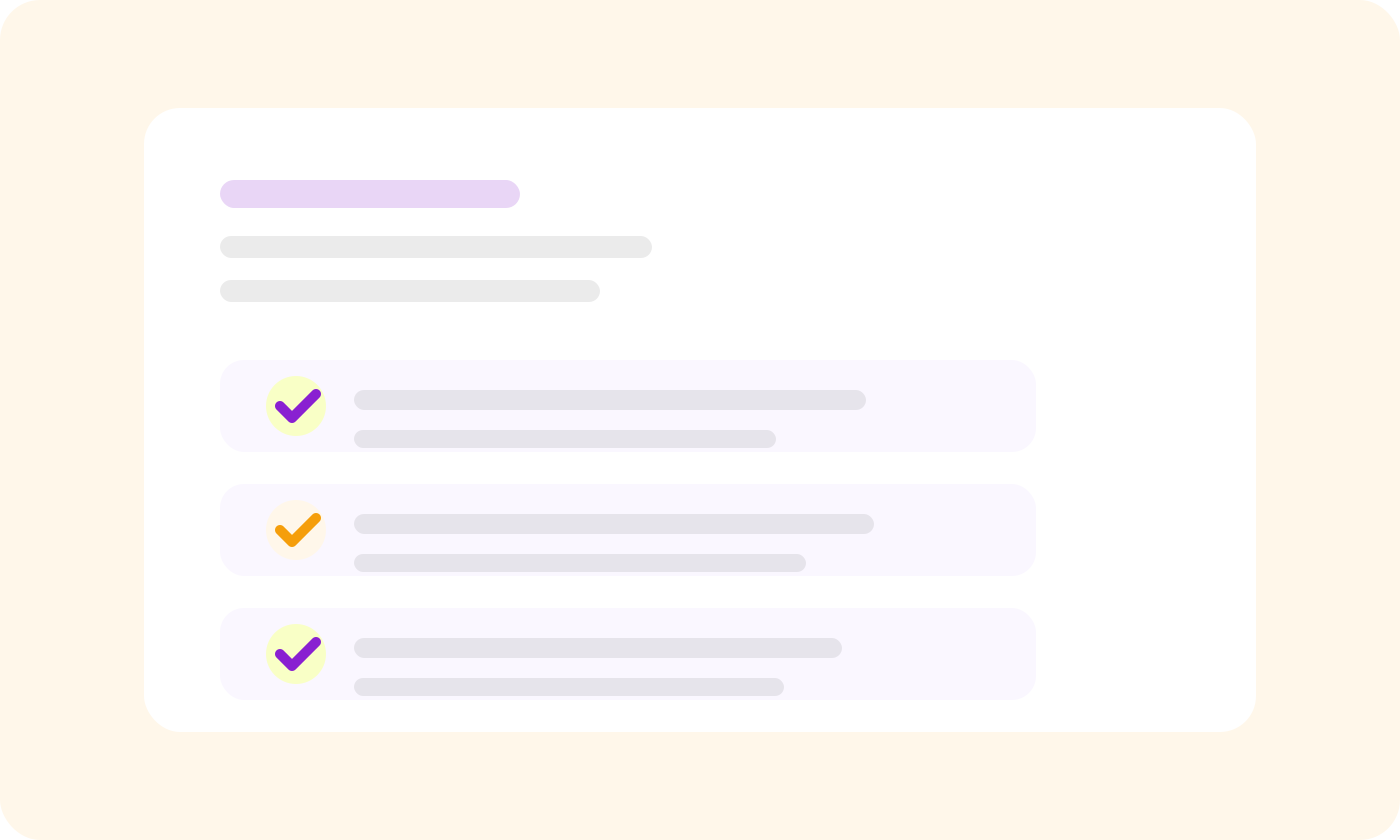
A good pre-visit message should feel reassuring, not administrative. Clients need enough detail to feel ready, but not so much detail that they skim past the important parts.
- Remind them of the date, local time, and duration.
- Confirm the exact address or meeting instructions.
- Explain in one line what to prepare: leash, treats, notes, household context.
- Add one sentence that lowers pressure: “You do not need to have everything perfect before we meet.”
Use reminders to protect both attendance and trust
A reminder email twenty-four to forty-eight hours before the session is often enough to cut forgetfulness without feeling intrusive.
The reminder becomes even more useful if it includes the practical details people usually search for at the last minute: time, address, name of the trainer, and a clear contact path in case something changes.
The best onboarding feels calm, not automated
Even when the process is automated, the tone should stay human. Clients should feel guided, not processed.
That is why short, well-written messages often outperform long templates. The goal is not to prove thoroughness. The goal is to make the upcoming visit feel simple and under control.